
Tesla Monson
Tesla A. Monson is an evolutionary biologist and Professor of Anthropology. She earned a BA in Anthropology from Princeton, an MA in Biological Anthropology from San Francisco State, and a PhD in Integrative Biology from UC Berkeley before completing her postdoctoral scholarship in the Institute of Evolutionary Anthropology at the University of Zurich. Tesla’s research on primate fossils and the evolution of reproduction is internationally recognized, and her work has been featured in outlets including Science, New Scientist, and Popular Mechanics.
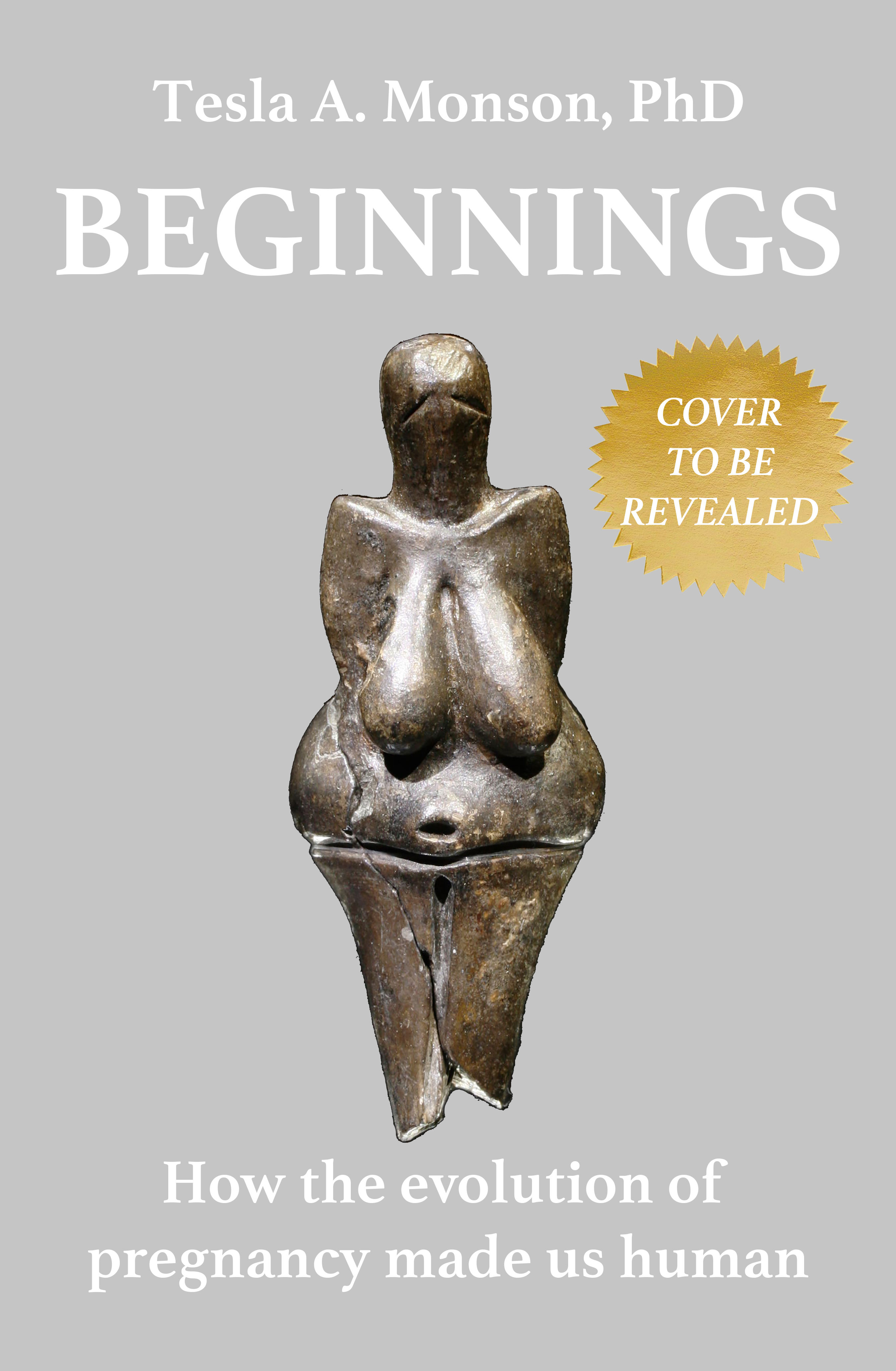
Beginnings
Paleoanthropologist and professor of anthropology Dr. Tesla Monson, PhD's BEGINNINGS: HOW PREGNANCY, BIRTH, AND MOTHERHOOD SHAPED OUR SPECIES, introducing the author's research alongside her lived experience as a mother to argue that reproduction and pregnancy are responsible for the evolution of human intelligence.
Eve meets Who We Are and How We Got Here in this exciting new examination of human evolution that puts motherhood at the center of the story.
Seven million years ago, a pregnant, apelike ancestor to the whole of our species found a secluded space on the forest floor and began her labor. An hour or two later, her baby emerged into the world, alert and able to hold on to their mother’s fur within minutes.
This very moment, a modern human is welcoming her baby into her arms after hours of labor and medical intervention. The birth has been exhausting, requiring the support of her community. Her infant is born entirely helpless, without the ability to even lift their head. These wildly different experiences reflect millions of years of evolution—but they also reveal something special about what has made humans so prolific and powerful.
In Beginnings, biological anthropologist—and mother—Tesla Monson charts the key changes to pregnancy and reproduction that define our species, showing that birth and motherhood aren’t just interesting side stories in our evolutionary history—they carry the keys to understanding how we became human. This paradigm-shifting argument draws on cutting-edge research to show that the secret to our success is not simply our brains or hands but the unique ways we parent and give birth.
With the comprehensive sweep of Yuval Noah Harari's Sapiens and the fiercely feminist focus of Angela Saini's Inferior, Beginnings offers a bold new vision of human evolution, one that honors the mothers of the archive and restores pregnancy to its rightful place as a core force in the shaping of our species.
Publication
US: Macmillan (Flatiron)
Release date: 20 April 2027